Key Information
| Title | Climate Oasis Program |
| Hazard | Heat |
| Region and Country | Emilia-Romagna, Italy |
| Action Type | Pilot programme |
| Further Categorisation | Climate shelters; public health; social resilience |
| Key links | Climate Oasis Emilia-Romagna Environment, Climate and Health — Emilia-Romagna |
Context
In recent years, Emilia-Romagna has experienced an unprecedented rise in extreme heatwaves during the summer months. According to data from the regional environmental agency Arpae Emilia-Romagna, summer temperatures have consistently shattered historical averages, heavily impacting the Po Valley plains and major urban centers like Bologna, Modena, and Parma.
Key climate insights from recent summer data include:
- Regional monitoring recorded average daily temperatures well above the 1991–2020 norm, with cumulative temperature anomalies exceeding +1.9°C across consecutive seasons.
- Peak temperatures during major heatwaves frequently spiked between 38°C and 40°C, turning urban areas into intense heat islands.
- July has repeatedly broken records, registering as one of the warmest months since 1961, with an unprecedented number of consecutive “torrid days” (giornate torride) affecting the lowlands.
- The summer of 2026 recorded an average of 47 tropical nights—the second-highest value since 1961—with urban Bologna peaking at a staggering 81 nights where temperatures never dropped below 20°C.
These prolonged thermal anomalies have triggered public health alerts and required emergency welfare frameworks to protect vulnerable populations from the combined pressure of stifling daytime heat and tropical nights.
Action Description
The objective is to promote the creation of a network of spaces dedicated to climate comfort and social interaction, serving as concrete actions to adapt to heatwaves and combat loneliness, with a particular focus on the most vulnerable population while remaining open to all citizens.
Following the definition of a set of indicators, the project began with a thorough analysis of the area’s climate, socio-health, and demographic profile. This study, conducted by the Regional Authority and Arpae, used specific maps to identify the urban areas most exposed to the effects of heatwaves and characterized by higher social and health vulnerabilities. Based on this analysis, the first ‘Climate Oases’ were piloted—shelters from the summer heat that also promote information-sharing, social gathering, and community activities for the population.”
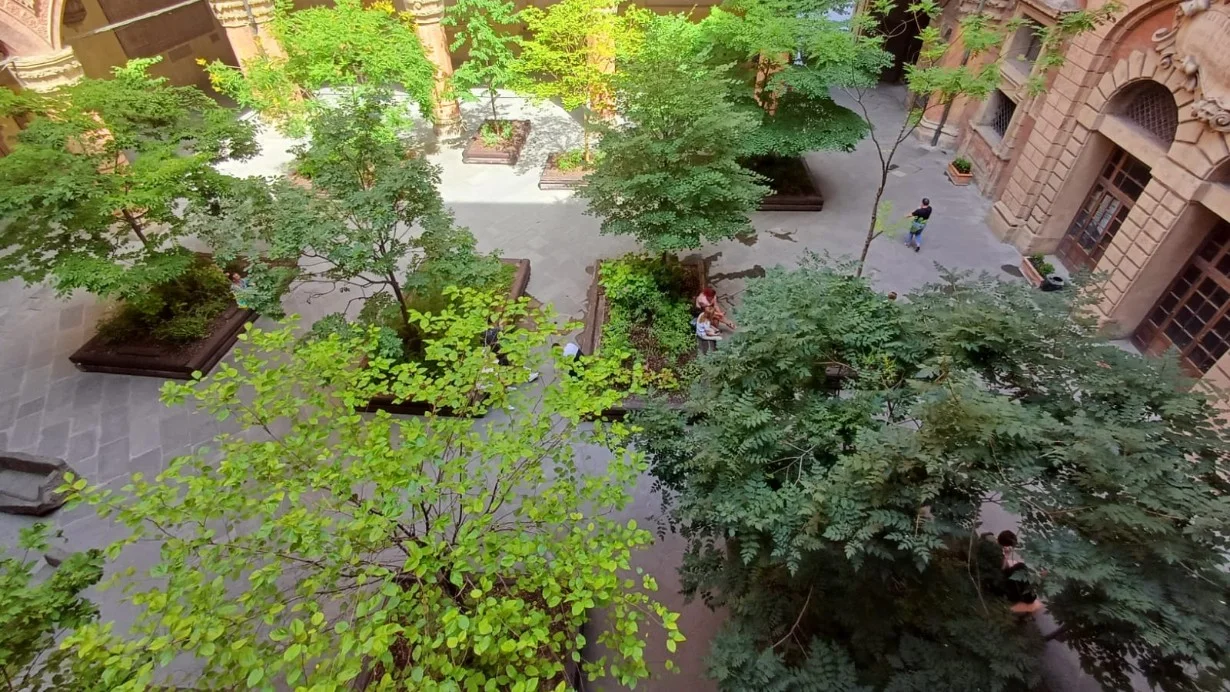
At the same time, the project will establish a widespread network of ‘Cool Spots’ (or climate shelters) throughout the city. These accessible locations will feature shaded outdoor areas with seating and water fountains in parks and squares, alongside easily reachable air-conditioned public spaces inside buildings.
Timeline & Evolution
Launched in autumn 2025, the project rolled out its first experimental phase in the summer of 2026, involving four pilot cities in Emilia-Romagna, includnig Bologna, Reggio Emilia, Ravenna e Rimini.
Actors & Governance
Action Owner: The Emilia-Romagna Region (Regione Emilia-Romagna). The project is integrated directly into the Regional Prevention Plan (Piano Regionale della Prevenzione), specifically operating under the regional program “Environment, Climate, and Health”
Lead Accountability: Overall coordination and responsibility are held by the Public Health and Epidemiology Department of the Emilia-Romagna Region.
Internal delivery relies on a co-governance structure spanning environmental monitoring, health agencies, and local municipalities:
- Arpae (Regional Environmental Agency): Responsible for the scientific foundation. Arpae leads the territorial mapping, climate analysis, and identifying specific high-risk urban heat islands.
- Local Health Authorities (AUSL): Accountable for cross-referencing demographic vulnerability data with socio-health fragility profiles. The participating local health units are:
- AUSL Bologna
- AUSL IRCCS Reggio Emilia
- AUSL Romagna (covering Ravenna and Rimini)
- Pilot Municipalities (Comuni): Responsible for localized on-the-ground deployment, operations, and community outreach. The four localized urban owners are: Comune di Bologna, Comune di Reggio Emilia, Comune di Ravenna and Comune di Rimini
External Stakeholders & Delivery Support
- Centro Antartide: Acts as the primary external facilitator, technical consultant, and operational partner. They support social engagement strategies, communication design, and activation of the spaces.
- Civic and Cultural Venues: Internal to the delivery framework, these entities open up their physical infrastructures. They include public libraries, neighborhood civic centers, museums, and municipal parks.
- Local Social & Voluntary Organizations: Involved in the implementation of “social gathering and animation activities” to contrast isolation among vulnerable demographics (the elderly and children)
Implementation Considerations
The project was not an isolated trial but was legally and financially anchored within the Emilia-Romagna Regional Prevention Plan. This institutional integration provided a clear legislative mandate, dedicated public health funding, and aligned the project with mandatory regional climate adaptation and health protection goals. What truly enabled targeted delivery was the ability to layer Arpae’s climate data on top of the Local Health Authorities’ (AUSL) vulnerability registries. This data-sharing mechanism allowed the project to pinpoint neighborhoods where high exposure to heat overlapped with high concentrations of vulnerable populations (isolated elderly, low-income households, and individuals with chronic illnesses).
Cost & Resourcing
- The action is co-funded by the Emilia-Romagna Region through the Regional Prevention Plan (PRP 2021–2025/2026), leveraging national and regional public health funds dedicated to climate change adaptation and health protection.
- Allocation of funds to the four pilot municipalities for the structural deployment of “Cool Spots.” This includes purchasing and installing urban infrastructure such as shaded tensile structures, outdoor seating/benches, and public drinking fountains, as well as covering the utility and maintenance costs of indoor air-conditioned spaces.
- Dedicated funds allocated to external facilitators (such as Centro Antartide) and local voluntary associations to manage public information campaigns, events, and community activities inside the Climate Oases.
Equity Considerations
While primarily designed as a climate adaptation and public health emergency measure, the “Oasi Climatiche” project delivers significant secondary benefits across multiple sectors. But of course the main co benefit is connected to social cohesion and loneliness alleviation: by integrating community animation and social gathering activities into the oases, the project directly combats social isolation among the elderly and vulnerable demographics, fostering stronger neighborhood networks.
Impact & Evidence
Specific usage or attendance data for individual cities in Emilia-Romagna (such as Bologna, Rimini, or Ravenna) are not currently available.
The initiatives have been highly successful on the ground. Visitors and local communities have signalled appreciation for the open-access spaces for providing immediate physical relief during peak heatwaves, while highlighting the social activities that brought together and supported vulnerable older citizens.
Best Practice Principles
Subnational governments and regional authorities facing escalating Mediterranean climate risks can adapt the “Oasi Climatiche” model by applying some design principles:
- Do not map climate hazards in isolation. Overlay high-resolution urban heat island (UHI) maps with localized socio-sanitary registries. This ensures infrastructure investments directly target areas where extreme thermal exposure intersects with high concentrations of vulnerable, isolated, or low-income populations.
- Recognize that a climate shelter is not just an infrastructure project, but a social intervention. Pair physical cooling with community animation, social engagement, and public health outreach. Turning a cooling center into a welcoming social hub and directly addresses the dual crisis of extreme heat and social isolation.
- Break down administrative silos by formally linking climate scientists, public health agencies, and local municipal operators. Anchoring the initiative within a statutory framework—such as a Regional Prevention Plan—locks in long-term public funding and guarantees institutional accountability.
Next Steps
Following the evaluation of the 2026 pilot phase, the Region Emilia-Romagna and its technical partners (Arpae and Centro Antartide) have laid out a structured roadmap to transition the Oasi Climatiche initiative from an experimental project into a permanent urban feature.