Photo credit: View source ↗
SHORT SOLUTION · LANDSCAPE GOVERNANCE
Key information
| Title | Climate Resilient Landscapes: Regional Landscape Boards |
| Region and Country | South Australia |
| Hazard | Cross cutting |
| Action Type | Governance Instrument |
| Strategy or Guiding Policy | Landscape South Australia Act 2019 and the State Landscape Strategy. The project is funded through the Landscape Priorities Fund established under the Act. |
| Key links | Landscape South Australia Homepage Landscape Board South Australia Blog Post Landscape SA About Us Landscape Priorities Fund |
Action Description
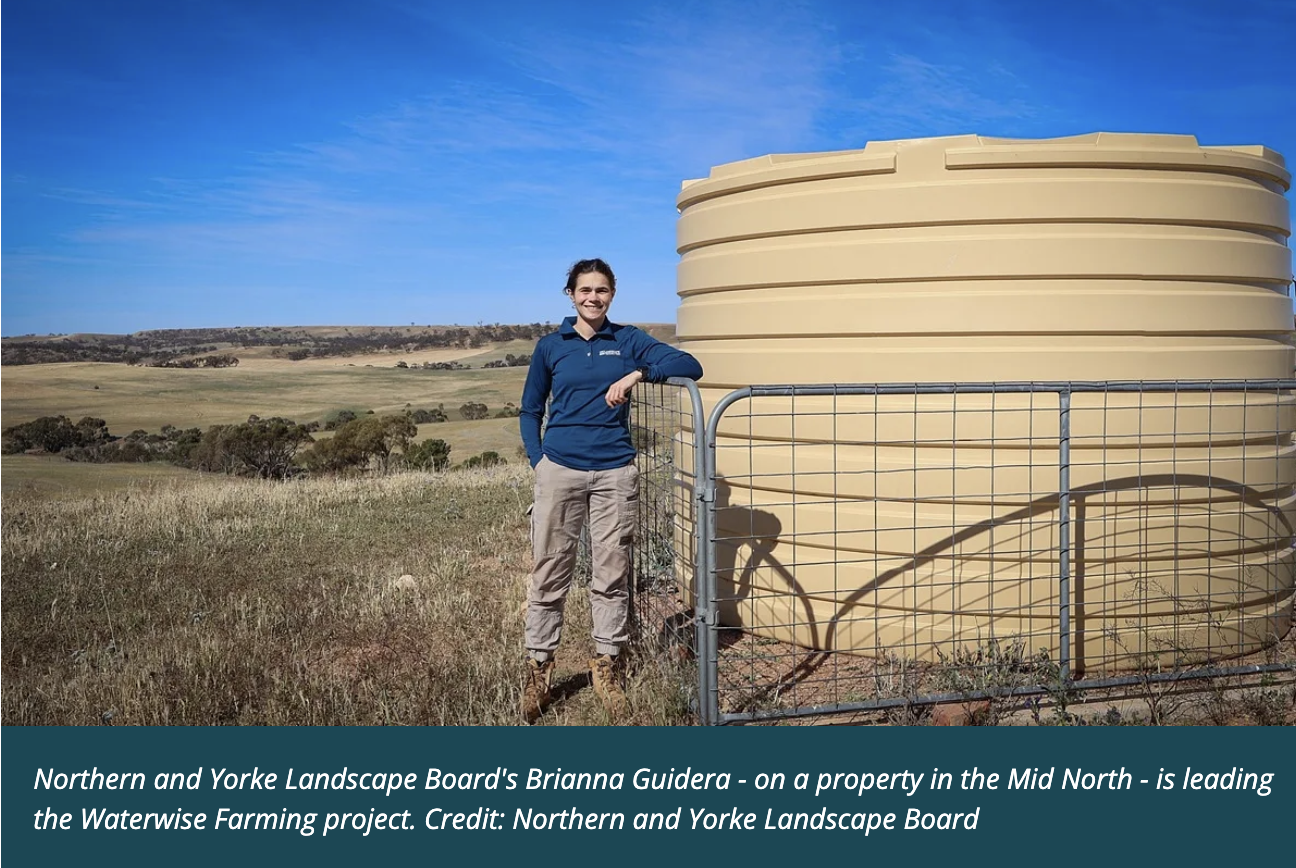
Climate Resilient Landscapes is a coordinated climate resilience project designed collectively by South Australia’s eight regional landscape boards and funded through the state’s Landscape Priorities Fund (LPF). Awarded in October 2025, it comprises eight regionally tailored sub-projects, one per board, each addressing locally specific drought and fire risk drivers while contributing to a shared statewide resilience outcome. The sub-projects focus on water security, feral animal control, soil health and resilient farm systems, and help primary producers and First Nations communities plan for dry times. In the north-west of the state, for example, the Water in the Desert sub-project builds infrastructure to capture opportunistic rain, providing emergency refuge for Anangu communities and extending buffel grass control into the Great Victoria Desert.
Landscape boards are statutory bodies established under the Landscape South Australia Act 2019, a state law. There are nine boards: eight regional boards and Green Adelaide, the board for metropolitan Adelaide. The boards work with partners to deliver practical, on-ground programmes to manage landscapes. They invest landscape levies in regional priority issues and use Australian Government funding to manage and protect natural and productive landscapes.
The LPF is sourced from landscape levies collected by Green Adelaide and redistributed to the regional boards. This creates a structural transfer from urban to rural areas: metropolitan ratepayers contribute to the ecological and agricultural resilience of regional landscapes that underpin the state’s food system, water catchments and biodiversity. This funding logic reflects an understanding that urban and rural landscapes are part of the same system, and that urban communities have a stake in the health of regional landscapes.
The governance model set by the Act replaced the earlier natural resource management framework with a community-centred, regionally accountable system. Landscape boards develop five-year regional landscape plans in consultation with landowners and communities, and align with the State Landscape Strategy. The second generation of plans, covering 2026-2031, was released in August 2026 with the endorsement of the state Minister for Climate, Environment and Water. Annual business plans translate each plan’s priorities into yearly programmes.
First Nations knowledge is formally embedded. The board chairs first signed a Statement of Commitment to First Nations partnerships in December 2021 and renewed it in August 2026. The statement sets twelve commitments for embedding First Nations partnerships and expertise in delivering regional plans. A statutory independent review of the Act in 2023-24 made 66 recommendations across 14 areas, which are currently under implementation.
The collective climate theme has continued. In the 2026-27 LPF round, seven boards are delivering individual projects under the shared theme of building nature-based resilience to climate change.
Who in regional government delivers this
The nine regional landscape boards (eight regional boards and Green Adelaide) deliver the project. They report to the state Minister for Climate, Environment and Water. The Department for Environment and Water (DEW), the State environment agency, administers the LPF and leads the State Landscape Strategy. The SA Drought Hub, a drought resilience network funded through the Australian Government’s Future Drought Fund and led by the University of Adelaide, co-invested in the project.
Cost / Funding source
The project is funded through the LPF, which is financed from landscape levies collected in metropolitan Adelaide. The 2025-26 LPF round awarded the landscape boards nearly AUD 2.5 million. The 2026-27 LPF round totals AUD 3.84 million.
Best Practice Principles
Give regional bodies a statutory mandate to plan with communities. Establishing regional bodies in law, with a duty to plan in consultation with landholders and communities, moves natural resource management from a top-down framework to regionally specific priorities. In South Australia this rests on a state act.
Bring community and First Nations knowledge into resilience programmes.
Fund rural resilience from urban levies. Redistributing levies raised in a metropolitan area to regional bodies lets urban ratepayers fund the resilience of the rural areas acknowledging interdependencies.