Key Information
| Title | Tangier Wastewater Treatment & Reuse Programme (Boukhalef WWTP System) |
| Hazard | Drought |
| Region and Country | Tanger-Tétouan-Al Hoceïma, Morocco |
| Action Type | Infrastructure |
| Further Categorisation | Wastewater reuse; non-potable water substitution; urban green-space irrigation |
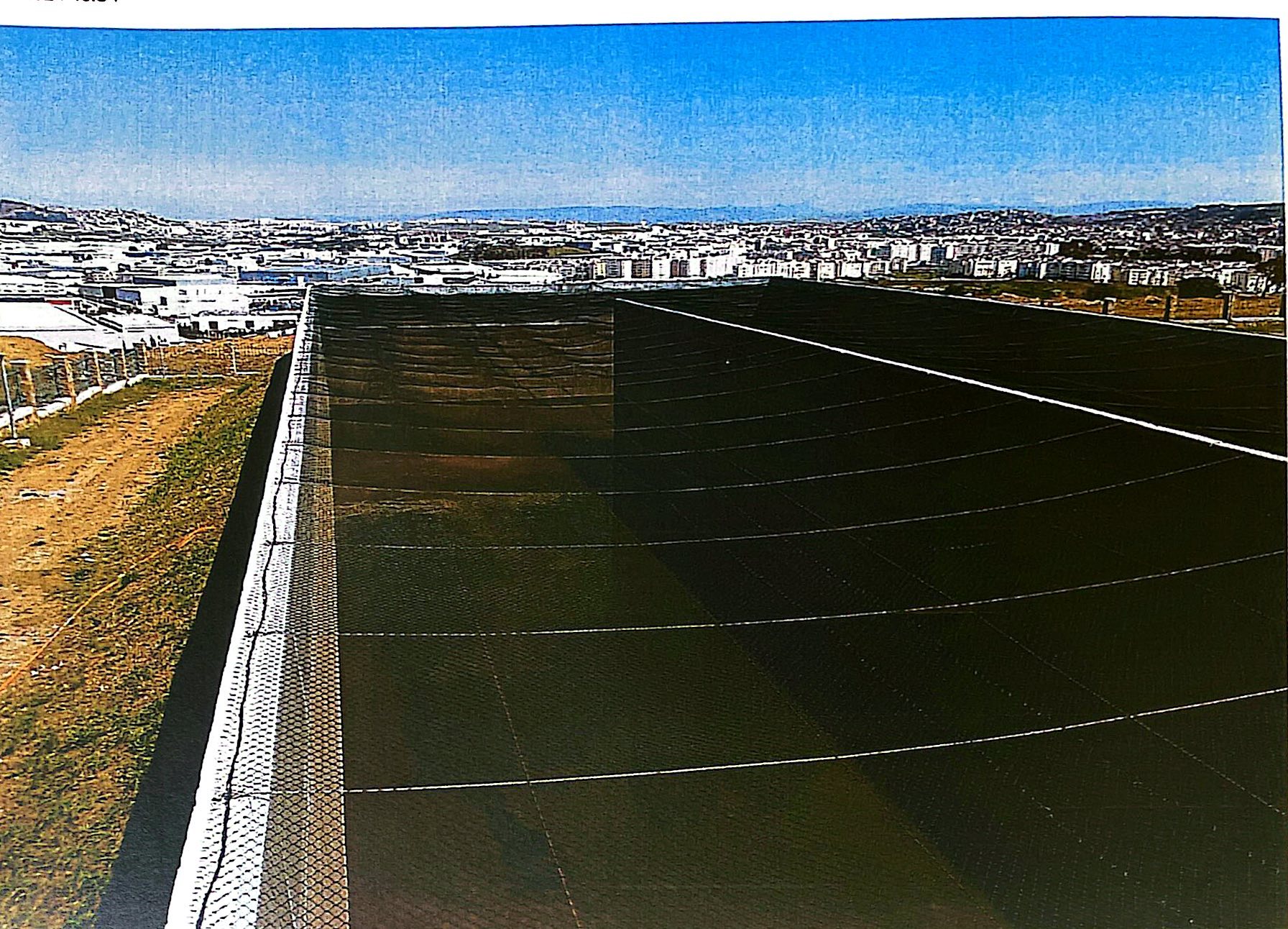
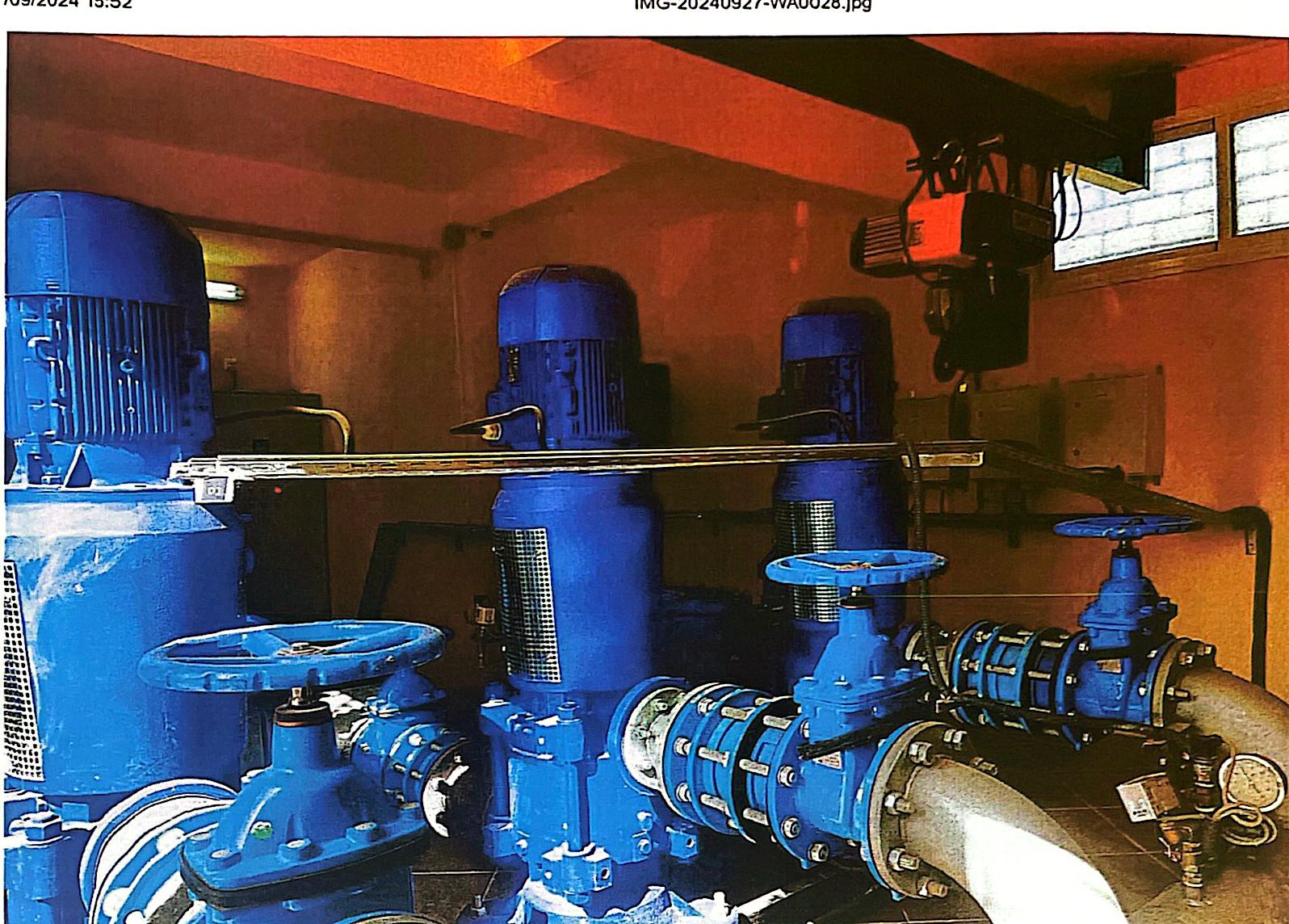
| Key links | Images supplied with the case study |
Context
Morocco faces structural water scarcity. Per capita water availability was reported at 606 cubic metres a year in 2024 reporting from Morocco’s Ministry of Equipment and Water, against the internationally recognised 1,000 cubic metre threshold that marks the onset of water scarcity. The country has experienced consecutive years of drought since 2018, with reservoirs running at a fraction of capacity.
Tangier and the wider Tanger-Tétouan-Al Hoceïma region face this pressure directly. Reusing treated wastewater for non-potable uses, primarily irrigation of green space, has become a formal government policy response, embedded in Morocco’s national sanitation and reuse programme.
Diversifying water sources is a critical pillar of water resilience- maximising reuse through water treatment for non-potable uses reduces pressure on supplies.
Action Description
A multi-phase infrastructure and financing programme, that treats wastewater to tertiary standard and reuses it to irrigate public green space, golf courses, and forest buffer zones across Tangier, Gueznaia, Tétouan, and Assilah, reducing demand on potable water supply for non-drinking uses.
Delivery combines investment in treatment capacity with investment in the distribution pipelines needed to get treated water to where it’s used. This has proceeded in three signed phases since a first partnership convention in December 2016, each adding new geographic coverage, new infrastructure, and a fresh multi-party financing agreement, rather than a single upfront masterplan. Each phase has also expanded recycling capacity and the volume of high-quality treated water available for reuse.
The programme is anchored by treatment plants operated by Amendis, a subsidiary of the French utility group Veolia. Amendis has held the delegated management concession for water distribution, electricity distribution, and sanitation across the Tangier-Tétouan region since 2002, currently serving around 1.8 million people. Two Boukhalef plants supply the Tangier network directly, and a separate Tamuda Bay plant supplies Tétouan and the M’diq-Fnideq area.
Key Figures at a Glance
| Indicator | Value |
|---|---|
| WWTP capacity (Boukhalef) | 42,700 m³/day |
| Total green space irrigated (Phases I+II) | 285 ha (>75% of Tangier+Gueznaia total) |
| Water saved since 2015 | ~9 million m³ cumulative |
| Annual savings target (from 2024) | 3 million m³/year |
| Total investment (3 phases) | ~539 MDH (~$54M) |
| Price of reused water | 2.5 DH/m³ TTC |
| Distribution network | 166+ km across 3 phases |
| Partners per convention | Up to 9 co-signatories |
Timeline & Evolution
The Three-Phase Programme (2016–2026)
Phase I: December 2016 : The first multi-partner convention, covering Tangier, Tétouan, Martil, M’diq and Fnideq, was signed on 16 December 2016 with a total budget of 130 MDH, of which 55 MDH was allocated to Tangier. This first phase began in 2015 with the commissioning of the Boukhalef WWTP, the laying of an 8 km distribution network, and the installation of a 120 l/s pumping station to irrigate approximately 110 hectares of green spaces.
Phase II: July 2021 A second convention was signed in July 2021 between 8 partners: the Ministry of Interior, the Ministry of Economy, the Tanger-Tétouan-Al Hoceima Region, the municipalities of Tangier and Gueznaia, the Loukkos Hydraulic Basin Agency, the delegating authority, and Amendis.
Total budget: 124 MDH TTC, co-financed by the national PNAM programme (50 MDH), the Region (34 MDH), the Commune of Tangier (20 MDH) and the Commune of Gueznaia (20 MDH). The works included the extension of the Ibn Battouta reservoir (5,000 m³), 8 new pumping stations, 64.5 km of main pipeline, and 4.7 km of secondary distribution pipes, targeting 150 additional hectares of green space with a water demand of 3 million m³/year.
Phase III: October 2022 Phase 3 will serve an additional 166 hectares with a water need of 3.4 million m³/year. In Tangier and Gueznaia, it reinforces existing infrastructure and extends distribution pipelines to the upper parts of the city, while also strengthening fire prevention capacity in the forests of Rahrah, Sloukia and Médiouna. It also extends the programme to the city of Assilah for the first time, targeting 36 hectares of green spaces including 15 hectares at the Marina Golf course, supplied by the Marina Golf wastewater treatment plant. Total budget: 285 MDH (2023–2026), involving 9 signatories including the Commune of Assilah.
Total cumulative investment across all three phases: approximately 539 MDH (~$54 million) over 2016–2026.
Infrastructure: The Boukhalef System
The reuse system is anchored by three treatment plants, all operating with tertiary activated-sludge treatment compliant with Morocco’s national irrigation water standards:
Boukhalef WWTP 1 : commissioned 2015, capacity 10,700 m³/day
Boukhalef WWTP 2: commissioned 2021, capacity 32,000 m³/day
Tamuda Bay WWTP: serving Tétouan and the M’diq-Fnideq axis, capacity 31,000 m³/day
The Boukhalef plant now treats 42,700 m³ of wastewater per day. Amendis is planning a further 95 km extension of the reuse distribution network, five new pumping stations, and upgrades to the Assilah Marina Golf treatment plant.
Actors & Governance
This programme brings together national, regional, and local government alongside a private operator, reflecting the multi-level coordination this kind of reuse programme demands.
The Regional Government of Tanger-Tétouan-Al Hoceima oversees and coordinates this program, alongside stakeholders from Morocco’s National Government. A defining feature of this case study is its governance architecture. Each convention brings together up to 9 co-signatories with clearly defined roles and financial commitments:
Ministry of Interior: national programme financing via PNAM
Ministry of Economy & Finance: budget directorate co-signatory
Tanger-Tétouan-Al Hoceima Region: regional co-financing
Communes of Tangier, Gueznaia, Assilah: local co-financing and land provision
Loukkos Hydraulic Basin Agency: regulatory authority for reuse authorisation and water quality oversight
ECI Al Boughaz: delegating authority for water and sanitation services
Amendis (Veolia) : technical operator, project designer and implementer
The price of reused water is contractually fixed at 2.5 DH TTC/m³, significantly below the potable water tariff, making the model financially viable for municipalities. Governance is ensured by a monitoring committee chaired by the Wali of the Tanger-Tétouan-Al Hoceima Region, meeting quarterly.
Integration into Morocco’s National Water Strategy
Tangier’s reuse programme is now fully embedded in Morocco’s national scaling strategy. By end-2023, national reuse projects were collectively valorising around 37 million m³ of treated wastewater per year, irrigating 31 golf courses and the green spaces of 17 cities. The national target is 100 million m³/year by 2027.
Morocco has set a long-term national goal of mobilising up to 573 million m³ of treated wastewater annually through its National Shared Liquid Sanitation and Reuse Programme, one of the country’s most strategic water initiatives.
In July 2025, Morocco launched a national programme worth MAD 56 billion ($5.6 billion) to accelerate wastewater treatment and sanitation infrastructure across the country, covering 389 ongoing and 694 new projects nationwide. Tangier’s infrastructure is central to this national scaling effort.
Implementation Considerations
Each phase depends on a freshly negotiated convention naming a specific financial contribution from each partner, rather than drawing down a single pre-agreed budget over time.
Further network extension, approximately 95 km, plus five new pumping stations and an upgrade to the Assilah Marina Golf treatment plant, is planned to continue past the current phase
Cost & Resourcing
Phase I (2016): 130 million dirhams total, 55 million allocated to Tangier.
Phase II (2021): 124 million dirhams, co-financed by the national PNAM programme (50 million), the region (34 million), the Commune of Tangier (20 million), and the Commune of Gueznaia (20 million)..
Phase III (2022–2026): 285 million dirhams, with nine signatories including the Commune of Assilah.
Cumulative total across all three phases: approximately 539 million dirhams (roughly $54 million).
Co-Benefits & Trade-Offs
Ecological health and forest fire prevention. Increased water availability for watering natural assets can contribute to ecosystem health and natural function, which can in turn build resilience to wildfire and extreme heat. Phase III aims to strengthen fire prevention in the peri-urban forests of Rahrah, Sloukia and Médiouna.
Retention of urban green space during drought restrictions. Treated water gives the city a source for irrigating public green space when drinking water cannot be used for this purpose. In February 2024 the Wilaya of Tanger-Tétouan-Al Hoceïma banned the use of drinking water to irrigate green spaces and public gardens in Tangier. The Wilaya is the regional administration of Morocco’s national Ministry of Interior. The city turned to treated wastewater for this irrigation.
Reduced pollution of coastal waters. Treatment at Boukhalef aims to protect the coastal waters that receive wastewater from the areas it serves. The plant forms part of a programme to reduce pollution along 65 km of coastline from Cap Malabata to Assilah. That programme aims to improve bathing water quality and remove odour nuisance.
Lower irrigation costs for municipalities. Treated water is priced at 2.5 DH TTC (dirhams, tax included) per m³, below the drinking water tariff. This can reduce the water bills the communes pay to irrigate public green space.
City attractiveness and tourism. Tangier is a destination for recreational and seaside tourism. Irrigated green space and golf courses can support the city’s attractiveness to visitors.
Impact & Evidence
Water savings: Since its commissioning in 2015, the Boukhalef WWTP has enabled the reuse of nearly 9 million m³ of water, with a target of reaching 3 million m³ in annual savings from 2024 onwards.
Between 2016 and 2022, Amendis saved and preserved 8.7 million m³ of water through reuse, targeting 2.8 million m³/year from 2023, the equivalent of the drinking water supply for a city of 55,000 inhabitants.
Areas irrigated: Phases I and II together enable the reuse of treated wastewater to irrigate 285 hectares of green spaces across Tangier and Gueznaia- more than 75% of the total green space surface area of both communes, a significant benchmark at both the national and continental level.
Areas served include urban parks, the Royal Golf Tangier, the Merkala corniche, boulevards El Quods, Moulay Rachid and Ziaten, green spaces along the RN1, RN2 and the coastal bypass, as well as peri-urban forests for fire prevention under Phase III.
Water quality monitoring: Amendis’s water quality monitoring laboratory analyses nearly 60 parameters per sample, amounting to approximately 9,000 parameters analysed annually, ensuring full compliance with national reuse standards.
Network efficiency: Amendis has also achieved a drinking water network efficiency rate of 79% in Tangier — one of the highest in Morocco — further reducing pressure on freshwater resources.
Best Practice Principles
Harness long-term delivery relationships within the water sector to drive incremental innovation. Treated water reuse in Tangier was introduced through Amendis’ concession for water and sanitation services, which has been in place since 2002. Regions with long-term service contracts or public utilities already in place can use these relationships to introduce and extend new approaches to water management.
A phased approach to delivering projects. The programme has been delivered through three conventions since 2016. Each added new areas, new infrastructure and a new financing agreement, allowing the network to grow as funding was secured.
Multi-level co-financing with clearly defined roles. Each convention names a financial contribution from national government, the region and the communes involved. Wastewater reuse is costly to deliver and returns can be low. Sharing costs across levels of government can make investment possible for regions and municipalities.
Planning treatment capacity and distribution networks together. Treated water can only replace drinking water for irrigation where pipelines, pumping stations and storage reach the sites that use it. Each phase in Tangier has funded distribution infrastructure alongside treatment.
Pricing treated water below the drinking water tariff. A fixed price below the drinking water tariff can support uptake by municipalities. Uptake may be slower where users have access to cheap or free conventional water.